


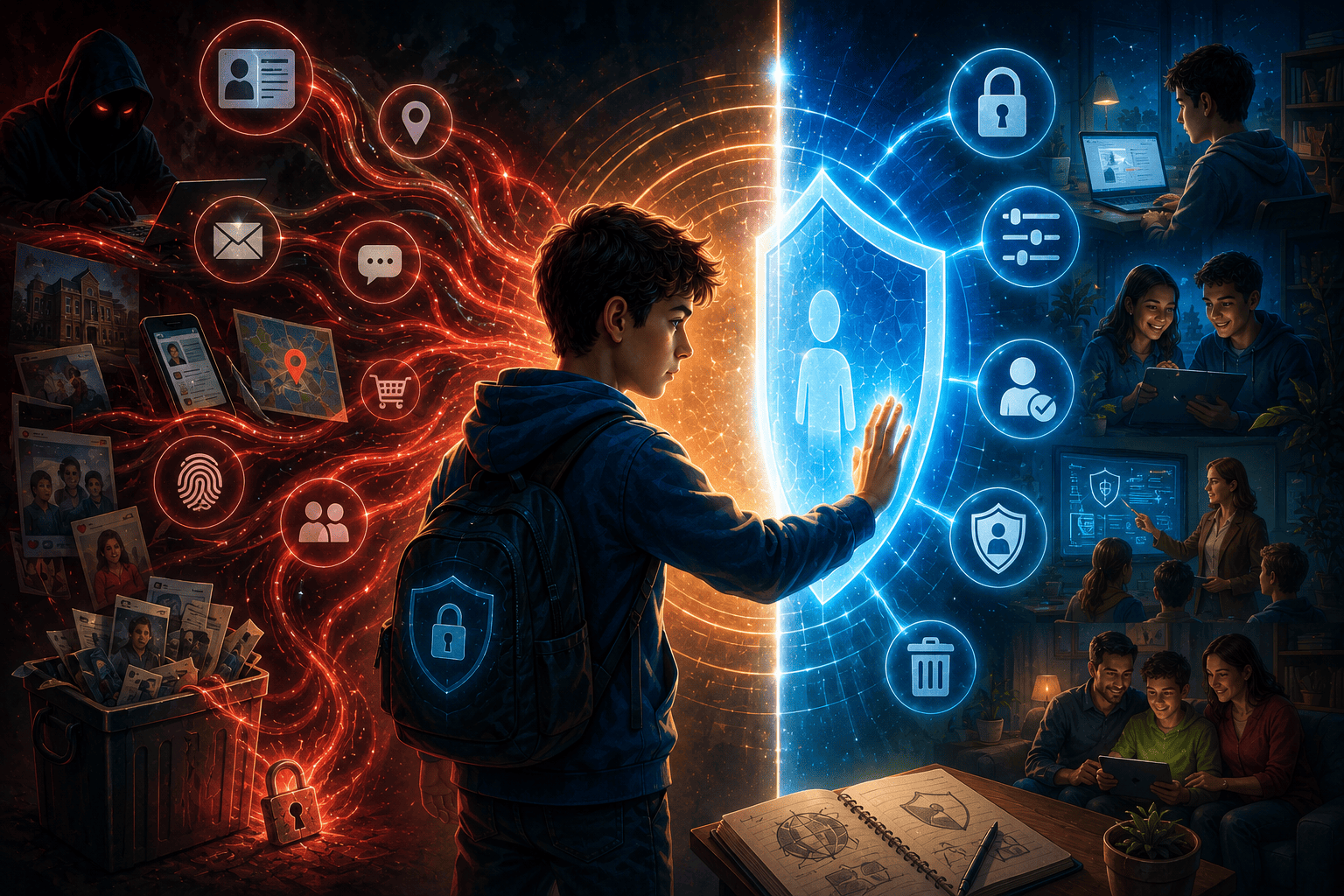
“Privacy isn’t about hiding.
It’s about being free to be yourself without being watched all the time.”
What Is Data Privacy?
Data privacy means having the right to decide what happens to your personal information.
It’s about control.
Who can see your data.
How long it’s stored.
Why it’s being used.
And whether you agreed to it.
In real life, this includes your activity on social media, apps, games, online stores, school platforms, and even public services.
What Counts as Personal Data?
Personal data is any information that can identify you — directly or indirectly.
This includes:
- Your name, email, phone number, student ID
- Home address, IP address, device identifiers
- Location data and browsing history
- Photos, likes, comments, and messages
- School records, health information, beliefs, and habits
Your data is valuable.
It can be used to show ads — or to manipulate, profile, and deceive you.
What Is LGPD?
LGPD stands for Lei Geral de Proteção de Dados, Brazil’s General Data Protection Law.
It exists to protect you.
Under LGPD, you have the right to:
- Know what data is being collected about you
- Say no to how your data is used
- Ask for corrections or deletion
- Understand why your data is being processed
This law applies to companies, schools, apps, websites, and any organization that collects personal data.
Why Does This Matter to You?
Because your life is increasingly digital — and that creates real risks.
Without protection, your data can be used for:
- Targeted cyberbullying
- Online scams and identity theft
- Algorithmic manipulation
- Invasive or abusive apps
- Loss of control over your digital identity
Your data speaks for you — even when you’re not there.
And if it’s not protected, it can be used against you.
How to Protect Your Data (Lucas’ Rules)
Use Strong, Unique Passwords
Never reuse the same password everywhere.
Enable Two-Factor Authentication
This adds a second layer of protection beyond your password.
Watch App Permissions
Think twice before allowing access to your microphone, camera, contacts, or location.
Control Your Privacy Settings
Decide who can see your posts, stories, and profile details.
Never Share Personal Data Publicly
Avoid posting or sending sensitive information in open groups or forums.
Be Careful with Quizzes and Games
Many “fun tests” are designed to collect your data.
Don’t Click Suspicious Links
Even if they come from someone you know — accounts get compromised.
If You’re Under 18
Talk to your parents or guardians about digital safety.
Privacy protection works best when it’s shared and understood.
What If You Feel Your Privacy Was Violated?
You have rights.
If something feels wrong:
- Take screenshots as evidence
- Talk to a trusted adult or your school
- Report the issue to the platform
- Contact the company’s data protection officer
- If necessary, report it to the national data protection authority
You’re allowed to ask questions.
You’re allowed to demand respect.
Want a Career in Privacy and Data Protection?
This is a real and growing field.
Possible paths include:
- Privacy Analyst
- Data Protection Officer (DPO)
- Compliance Specialist
- Cybersecurity Professional
- Data Governance Consultant
Helpful areas of study:
- Law
- Business Administration
- Computer Science
- Information Security
- Specialized privacy certifications
Privacy Is Freedom
It’s not about disappearing.
It’s about deciding who you are online.
It’s about owning what belongs to you.
And if no one protects your privacy for you —
you need to learn how to protect it yourself.
Lucas’ Final Thought
“The most valuable data on the internet is you.
So treat yourself like something worth protecting.”
— Lucas, Cyber Heroes League


Deixe uma resposta