


Hi.
I’m Lucas.
And if there’s one thing I learned as a Guardian of Code Park, it’s this:
the most dangerous attacks don’t always come from viruses or malicious code.
They come from the right words, said at the right time, by the wrong person.
That’s called Social Engineering.
And yes — it works more often than people think.
What Is Social Engineering?
Social engineering is when someone manipulates you to gain access, information, trust, or control.
Instead of hacking systems, they hack human behavior.
Attackers may:
- pretend to be someone you trust
- create fake emergencies
- flatter you or build emotional connection
- invent stories that sound real
All to make you share something that should never be shared.
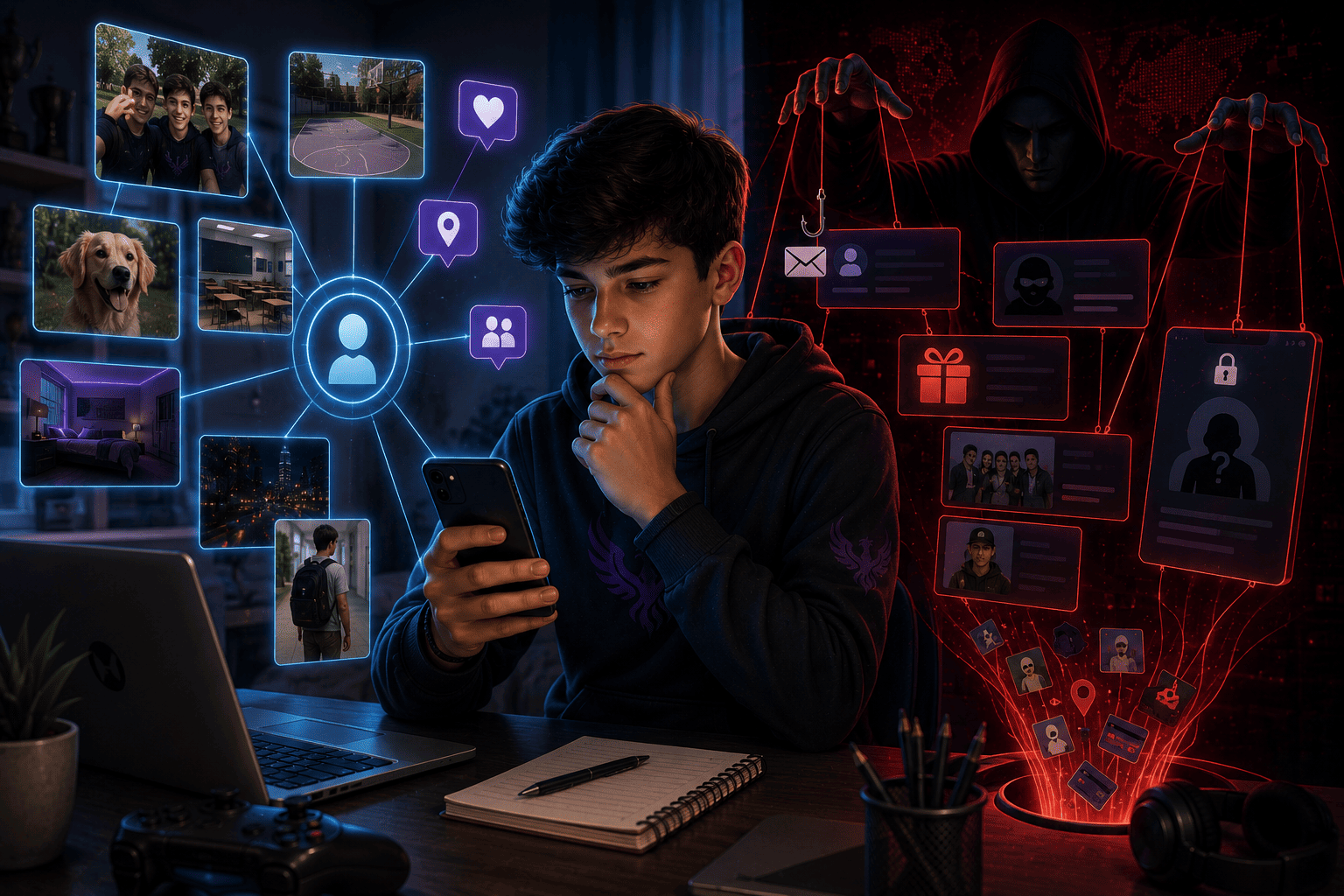
The Danger Starts With Likes and Posts
That photo you posted in your bedroom wearing your school hoodie.
That comment where you mentioned your dog’s name.
That story showing your daily routine.
It all seems harmless.
But social engineers collect details like puzzle pieces.
From your posts, they can learn:
- where you study
- who your friends are
- places you visit
- your interests and fears
- how you talk and react
With that, they create perfect traps, designed just for you.
Common Social Engineering Traps
Fake Messages
“Hi, this is your school. We need to confirm your information to activate your digital ID.”
That’s not your school.
That’s someone trying to steal your data.
The ‘Too Perfect’ Profile
“I saw your profile and thought you were amazing. Want to talk privately?”
Be careful.
It may not be who they claim to be.
Fake Giveaways and Promotions
“Congratulations! You won a new phone. Click here to confirm your details.”
Classic scam.
Your data is the real prize.
Cloned Profiles
“Hey, I changed my number! It’s me — remember?”
Always verify.
Someone could be impersonating a friend.
How to Protect Yourself
Reduce Your Exposure
- Avoid sharing your school name, address, or daily routine
- Think twice before posting uniforms, badges, documents, or screens
- Don’t expose your room, open chats, or logged-in devices
Lock Down Your Accounts
- Keep profiles private
- Only accept people you truly know
- Enable two-factor authentication (2FA) everywhere
Question Unexpected Messages
- Don’t click suspicious links
- Confirm strange requests through another channel
- Be cautious with urgency like “right now,” “don’t tell anyone,” or “help me fast”
When Should You Ask for Help?
Always speak up if:
- you feel manipulated or pressured
- you receive threats, blackmail, or strange requests
- a friend suddenly acts very differently
- someone asks for personal data, passwords, or private photos
There’s no shame in asking for help.
Talk to parents, guardians, teachers, or a trusted adult.
You are not alone.
Who Is Behind These Attacks?
It could be:
- professional scammers
- malicious hackers
- people looking for easy money
- emotionally manipulative individuals
- organized groups that do this daily
Sometimes, it can even be someone close to you.
That’s why knowing when to say no matters.
And knowing when to ask for help matters even more.
Lucas’s Final Advice
You don’t need to disappear from the internet.
But you should stop giving away the game for free.
Every like, post, and conversation tells a story.
The question is: who gets to read it?
Be smart.
Be curious.
But be careful.
Your security starts with your next click.
And yes — you can be your own Guardian.


Deixe um comentário